

HSA vs. FSA: What Is the Difference, and Can They Pay for DPC?

Dr. Kevin
HSA. FSA. Two short abbreviations that can make an already confusing benefits conversation even harder to follow.
Both can help you pay for eligible healthcare expenses, but they have different rules. Benefits should make care easier to afford, yet confusing details can leave people unsure how to use them. Let's look at the differences so you can make decisions with a clearer understanding of where your money goes.
If you are considering direct primary care, there is an additional detail to know: federal HSA rules changed in 2026. Older advice about DPC and HSAs may no longer describe the current requirements.
What Are These Accounts Actually For?
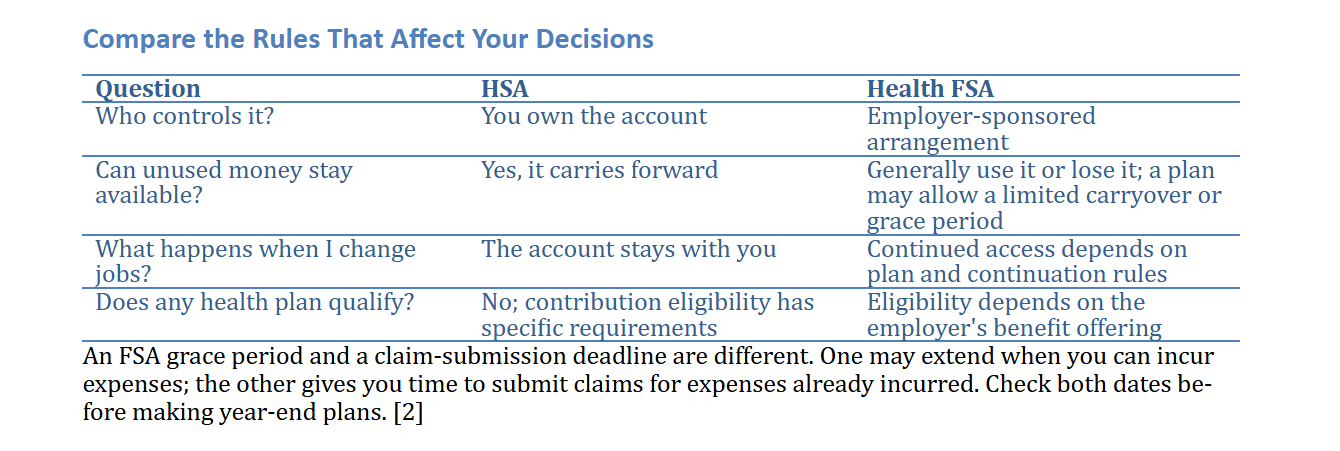
A health savings account, or HSA, is an account you own. Federal contribution eligibility generally requires an HSA-eligible health plan and no disqualifying coverage. Unused funds remain available for later years, and the account stays with you when you change jobs. [1]
A health flexible spending arrangement, commonly called an FSA, is offered through an employer. It lets you set aside money for eligible expenses under the employer's plan rules. [2]
Think of an HSA as money you can keep available for future eligible medical expenses. An FSA is more like a healthcare spending budget with a deadline, though some plans offer flexibility. That difference matters when deciding how much to set aside. Both arrangements offer federal tax advantages for eligible contributions and expenses, subject to their rules. [1, 2]
Can an HSA Pay for DPC?
Beginning January 1, 2026, qualifying DPC fees can be paid from an HSA. Preserving contribution eligibility also requires a qualifying arrangement within the applicable monthly fee limit: $150 for one person or $300 for an arrangement covering multiple people in 2026, with later inflation adjustments. Other HSA eligibility rules still apply. [3]
The agreement's services and payment structure matter; price alone does not establish eligibility. A qualifying arrangement above the fee cap can permit HSA payment while preventing new HSA contributions. Confirm the membership terms, including any initiation fee, before relying on HSA treatment. [3]
An FSA Is a Separate Question
The HSA change does not automatically make DPC membership fees FSA-eligible. Fees for access or future availability may be ineligible, while documented charges for actual medical services may qualify. Ask your FSA administrator how it treats your specific agreement and what documentation it requires. [4]
A payment card going through is not proof of eligibility. Keep the agreement, receipts, and any itemized documentation you receive. Also avoid seeking reimbursement twice for the same expense. [1, 4]
A California Detail Worth Understanding
Federal HSA tax benefits do not carry over unchanged to California taxes. California does not conform to federal HSA treatment, including the DPC changes. For Fullerton and other California residents, that distinction belongs in the conversation with a tax professional. [5]
Also check before combining accounts: general-purpose health FSA coverage can interfere with HSA contribution eligibility. Certain limited-purpose arrangements have different rules. [1]
What Can You Do Now?
You do not need to memorize every tax rule to take a useful first step. Find out which account you have, check its balance and deadlines, and ask about one expense you expect to pay. If DPC is on your list, have the administrator review the actual agreement. A little clarity now is better than an unexpected reimbursement problem later.
At Upper Echelon Medical, we can explain our membership services and charges so you have clear information to bring to your account administrator or tax professional. Taking a little time to understand the details can make your healthcare planning feel much more manageable.
Sources
[1] IRS, Publication 969: https://www.irs.gov/publications/p969
[2] HealthCare.gov, Using a Flexible Spending Account: https://www.healthcare.gov/have-job-based-coverage/flexible-spending-accounts/
[3] IRS Notice 2026-05, Questions 11-20: https://www.irs.gov/irb/2026-02_IRB
[4] FSAFEDS, Eligible Health Care FSA Expenses: https://www.fsafeds.gov/explore/hcfsa/expenses?q=fee
[5] California Franchise Tax Board, Summary of Federal Income Tax Changes, Section 71308: https://www.ftb.ca.gov/about-ftb/data-reports-plans/summary-of-federal-income-tax-changes/index.html